
WHY GOOD CRAFT PLANNING IS ESSENTIAL BEFORE CREW ARRIVE.
The best craft setup isn’t necessarily the biggest, the closest or the most obvious. Sometimes it’s a van. Sometimes it’s two service points. Sometimes it isn’t a vehicle at all. The useful bit is having enough visibility to work this out before we arrive on set.
There are plenty of things on a production that can only really be solved on the day.
Where to put craft services shouldn’t, ideally, be one of them.
We don’t attend tech recces, and we don’t need to. But early visibility of the shooting schedule, location information and anything unusual about the day gives us something extremely useful: time to think and plan.
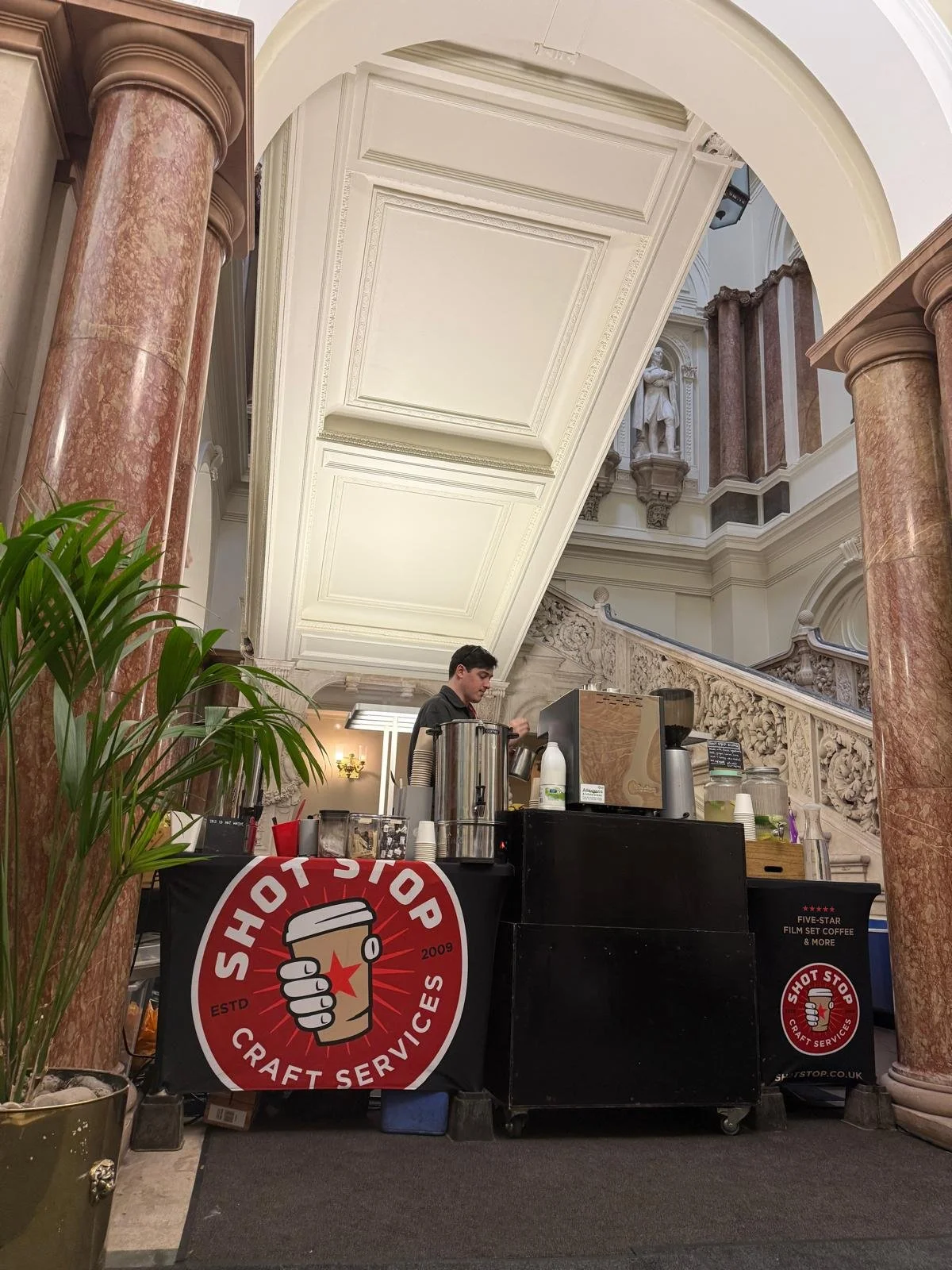
Pop up coffee shop inside The Foreign Office on The Diplomat
SOMetimes the right solution is no vehicle at all
On The Diplomat, filming took us to the Foreign Office in Westminster.
Westminster restrictions meant we couldn’t simply pull up outside and operate as a mobile street trader.
So the question changed from “Where can we put the van?” to “How else can we provide the service?”
We created a pop-up setup within the Foreign Office, bringing in the equipment, stock and everything else we needed to run the service without the van.
It worked brilliantly.
But it wasn’t something we could have decided to do when we arrived that morning. Equipment had to be organised. Everything had to be transported in. The setup needed to work in the space we’d been given.
Early visibility meant we could get all of that sorted beforehand.
By the time the crew wanted coffee, all they saw was a coffee bar.
They didn’t need to know about the rest.
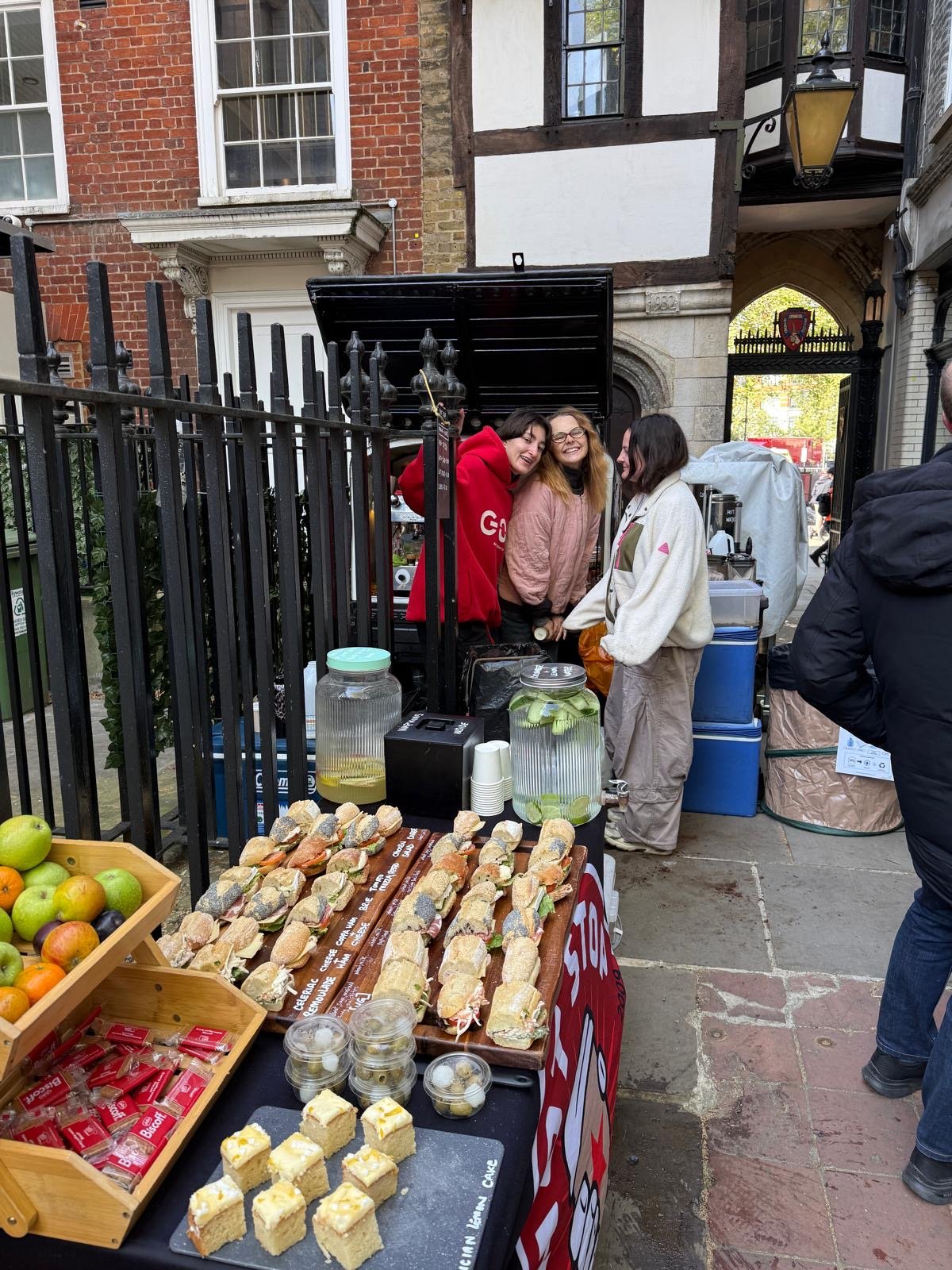
3 of our lovely baristas adapted brilliantly to manoeuvre equipment through the narrow gate & work together in the confined space.
300 Crew one very narrow gate
At The Priory Church of St Bartholomew the Great in the City of London, around 300 crew were due to be working the other side of a particularly narrow gate.
Our usual Mercedes Vito wasn’t getting through .
Serving from the road wasn’t the answer either. Space outside was already at a premium, with tech trucks and deliveries needing access.
Had we discovered all of that on arrival, our options would have been really limited.
Instead, we knew about the problem early enough to come up with another plan.
We swapped the Vito for Caesar, our tiny Piaggio Ape. Small enough to push through the gate, compact enough to operate in the available space and, importantly, able to put craft where the crew could actually use it.
By the time everyone arrived, there wasn’t a problem anymore.
You can read the full production moment and take a walk through the narrow gate here
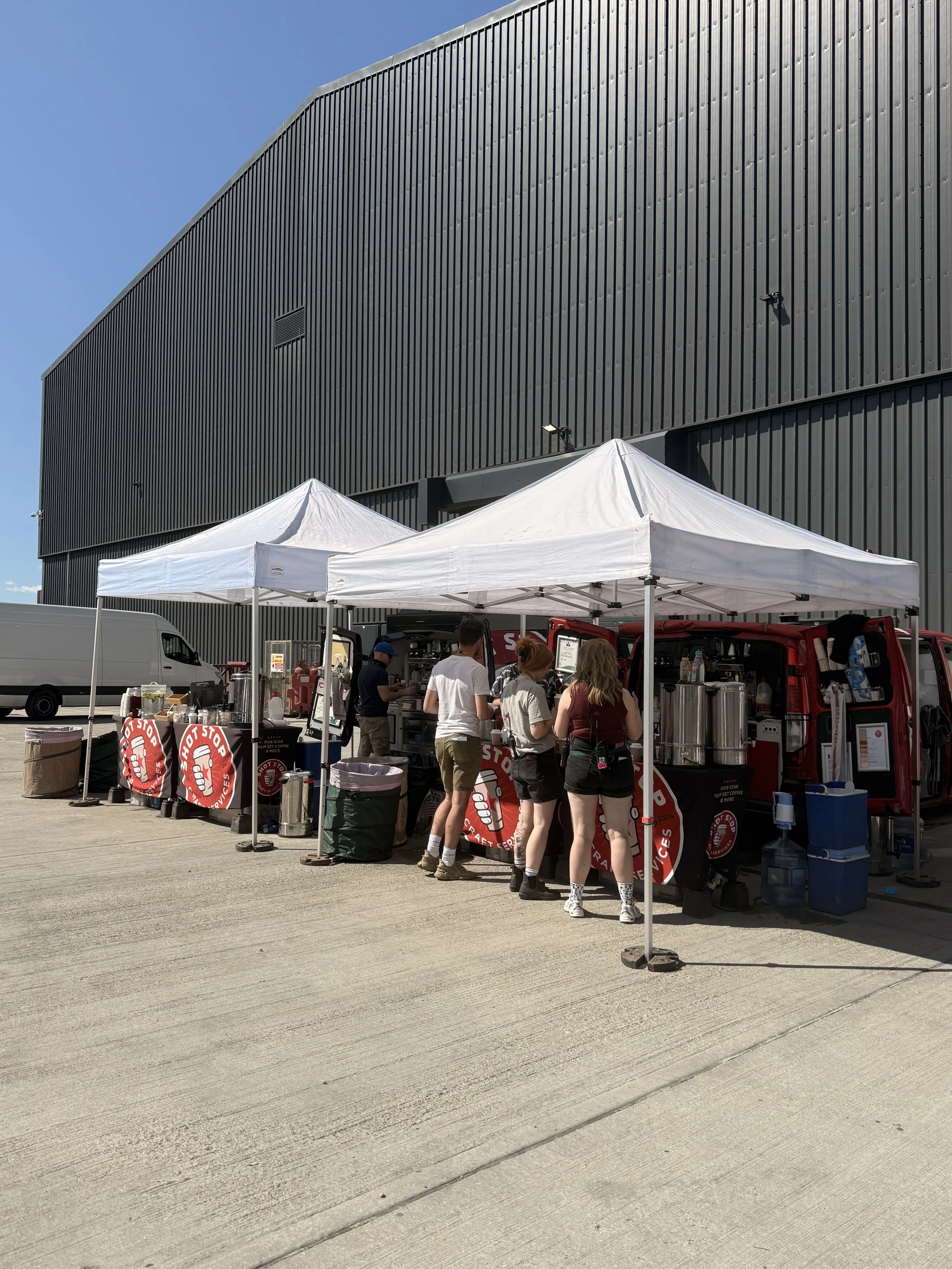
2 adjacent service points serving 400 crew on The Witcher S5 at Longcross Fim Studio
Two units. One van?
Then there’s the opposite problem.
Sometimes access is easy. There’s plenty of space. Power and water aren’t an issue.
There are just a lot of people wanting coffee at the same time.
On The Witcher at Longcross Studios, we were supporting two units working in adjacent studios.
Technically, we could have served both from one van..
But funnelling 400 + crew through one service point would have meant one very busy van, two frazzled baristas and, almost inevitably, queues of crew delayed from getting back to work.
So instead of asking how many people one van could serve, we looked at how those people would actually use it.
We created two adjacent service points, staffed by four baristas.
The demand was spread between the two bars, service stayed slick and the queues simply didn’t materialise.
Again, nothing dramatic happened.
That was the idea.
Same craft service. Three completely different setups.
Those three situations required three very different solutions.
At St Bartholomew’s, we needed a smaller vehicle.
At the Foreign Office, we didn’t need a vehicle at all.
At Longcross, we needed more service points.
This is why it’s difficult to design craft services around a crew number alone.
Where the crew are matters.
How they’re moving matters.
What the location allows matters.
What else is happening around us matters.
And the shooting schedule can tell us an enormous amount.
A second unit peeling away, a crowd day, a Westminster location, a mid day move or a particularly awkward access point might only be one line on a schedule.
For us, it can be the line that changes the plan.