
300 crew plus 1 very narrow gate.
Production: Elden Ring
Location: St Bartholomew the Great, City of London
Challenge: Providing craft services beside the set when conventional vehicle access was impossible.
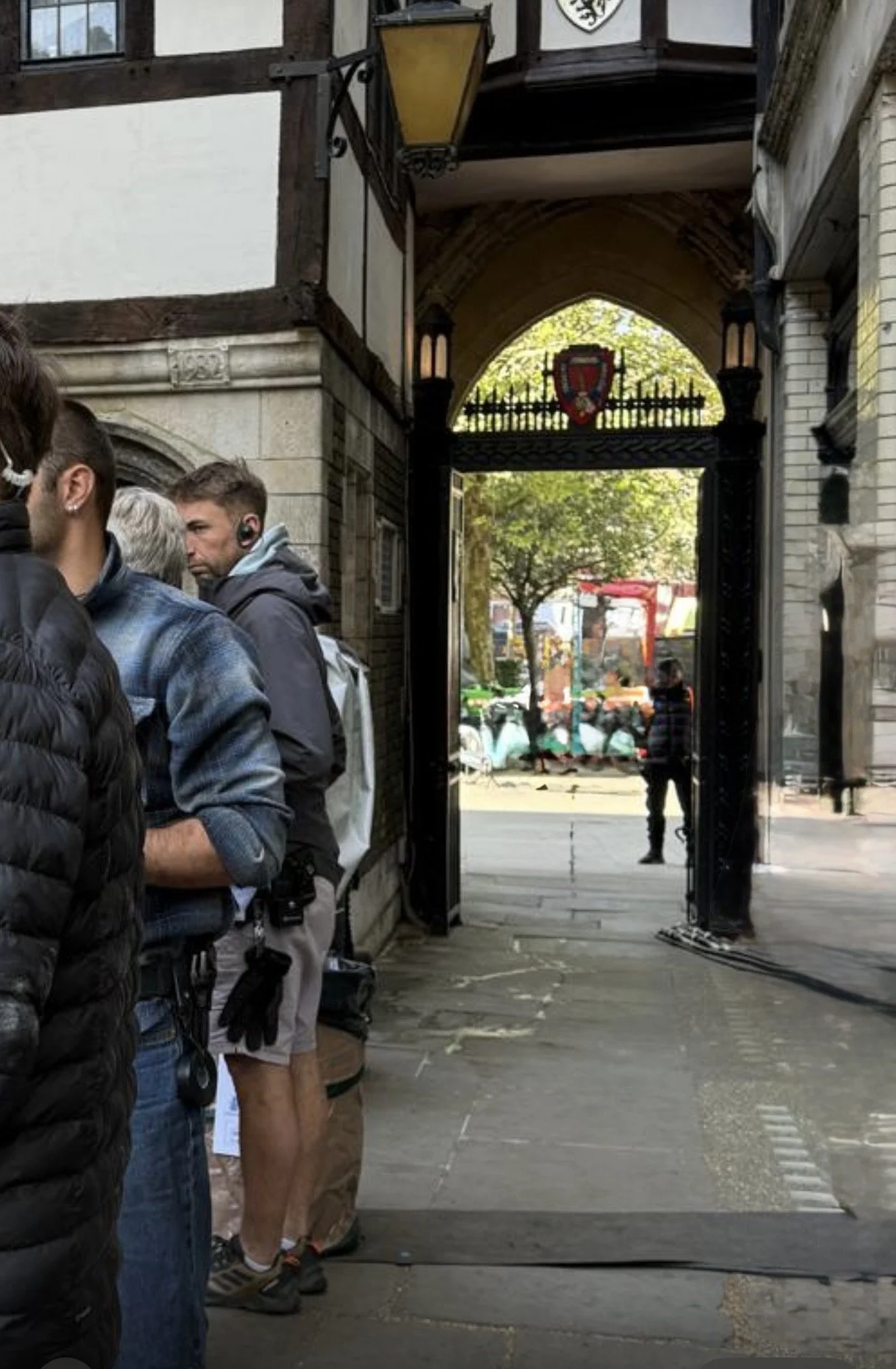
The narrow access point for 300 of us plus equipment
The CHALLENGE
When a production films in a historic location, access can quickly become problematic .
For three days of filming at St Bartholomew the Great, we needed to be close enough to the set to support a crew of around 300 people. But there was an obvious complication: the only entrance was through an exceptionally narrow gate.
Our usual Mercedes Vito had no chance of fitting through it.
Serving from the street wasn’t an option. The church sits beside the very busy Smithfield Market, so a constant stream of delivery vans needed access. The production’s tech trucks also needed delivery access, meaning a roadside setup would have interfered with both the market and the practical running of the shoot.
Unless we found a solution, there was a genuine possibility that the crew would have had no craft services at the location for those three days.
Planning for the location—not LEAVING IT TO CHANCE
Having early visibility of the shooting schedule meant we could look ahead at each location and identify anything that might affect the service before we arrived.
St Bartholomew’s immediately stood out. We knew our usual vehicle wouldn’t fit through the entrance, and the church’s position beside Smithfield Market ruled out serving from the road.
Because we spotted the issue early, we had time to speak with the locations team, understand how the space would be used and find a workaround that wouldn’t create another problem for the production.
That advance notice made all the difference. Difficult access is usually manageable when there is time to plan for it. Discovering at call time that a fully loaded vehicle can’t reach its service position is a very different situation.
After talking through the available space, delivery access and the movement of crew and equipment, we replaced our usual Mercedes Vito with Caesar, our trusty Piaggio Ape mobile coffee bar.
Caesar has a tiny footprint but still allows us to provide a complete barista service. However, the entrance was so tight that we had to carefully push Caesar through the gate and manoeuvre him into the passageway behind it—with very little room to spare.
The video below shows just how narrow the gate was..
Making a very small space work
Manoeuvring Caesar through the gate overcame the first challenge. We then needed to create a safe and efficient service area without disrupting the movement of 300 cast and crew—and all the equipment required for filming.
The narrow passageway was a key access route, so keeping it clear was essential. At the same time, three baristas needed enough room to work efficiently throughout the day.
There wasn’t enough space for our usual layout, so we adapted everything around the location. We positioned the coffee service, snacks and refreshments so they were easy for the crew to reach without blocking the passageway or creating trip hazzards. Our baristas also adjusted how they moved and worked around one another to make every available inch count.
It was incredibly tight, but it worked. Hundreds of people—and a considerable amount of production equipment—could continue moving through the location without craft services becoming an obstruction.
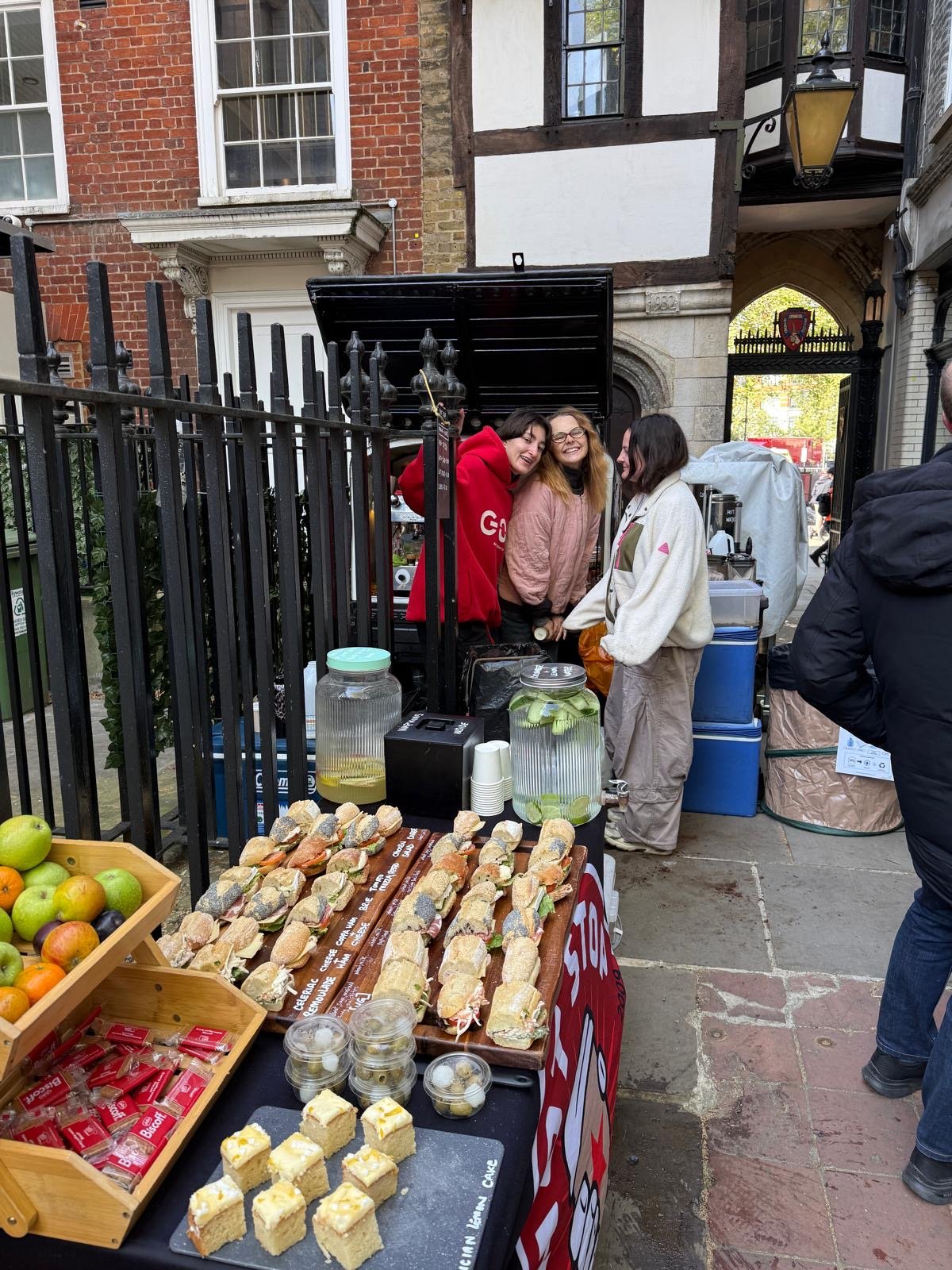
3 of our lovely baristas adapted brilliantly to work together in the confined space.
Craft services where the crew needed us most
For all three days, 300 cast and crew had snacks and refreshments immediately beside set.
They didn’t have to leave the church, negotiate the busy streets around Smithfield or spend valuable time ( or money) looking for refreshments elsewhere. They could quickly pick up what they needed and return to work.
That proximity matters on a busy shoot day. When crew only have a few minutes between takes, a service that is too far away can become a service they don’t have time to use. Being right beside the set made it easier for everyone to access coffee and snacks without disrupting the rhythm of the production.
Just as importantly, our setup didn’t take up space needed by the tech trucks, block market deliveries or restrict the flow of crew and equipment through the gate. The production didn’t have to work around us.
Caesar made the physical access possible, but the real solution began with having sight of the schedule early enough to ask the right questions. That allowed us to anticipate the problem, work with the fabulous locations team and adapt both the vehicle and the service layout before filming even began.
For the production team, that meant one less problem surfacing on the day—and a supplier they didn’t have to manage.
This is what closer to set, closer to crew means in practice.
Not every filming location is designed to accommodate conventional craft vehicles. Historic buildings, restricted entrances and busy city streets all require a little more thought. When we understand those challenges early enough, we can often find a way to provide the service without asking the production to work around us.
Sometimes that means changing the layout. Sometimes it means changing the vehicle. And sometimes it means pushing a tiny Piaggio Ape through a ridiculously narrow church gate.
If you’re planning to film somewhere with difficult access, limited space or no obvious place for craft services, it’s worth starting the conversation early. There may be more ways to make it work than first appear.
Take a walk with us through the very narrow gate.