
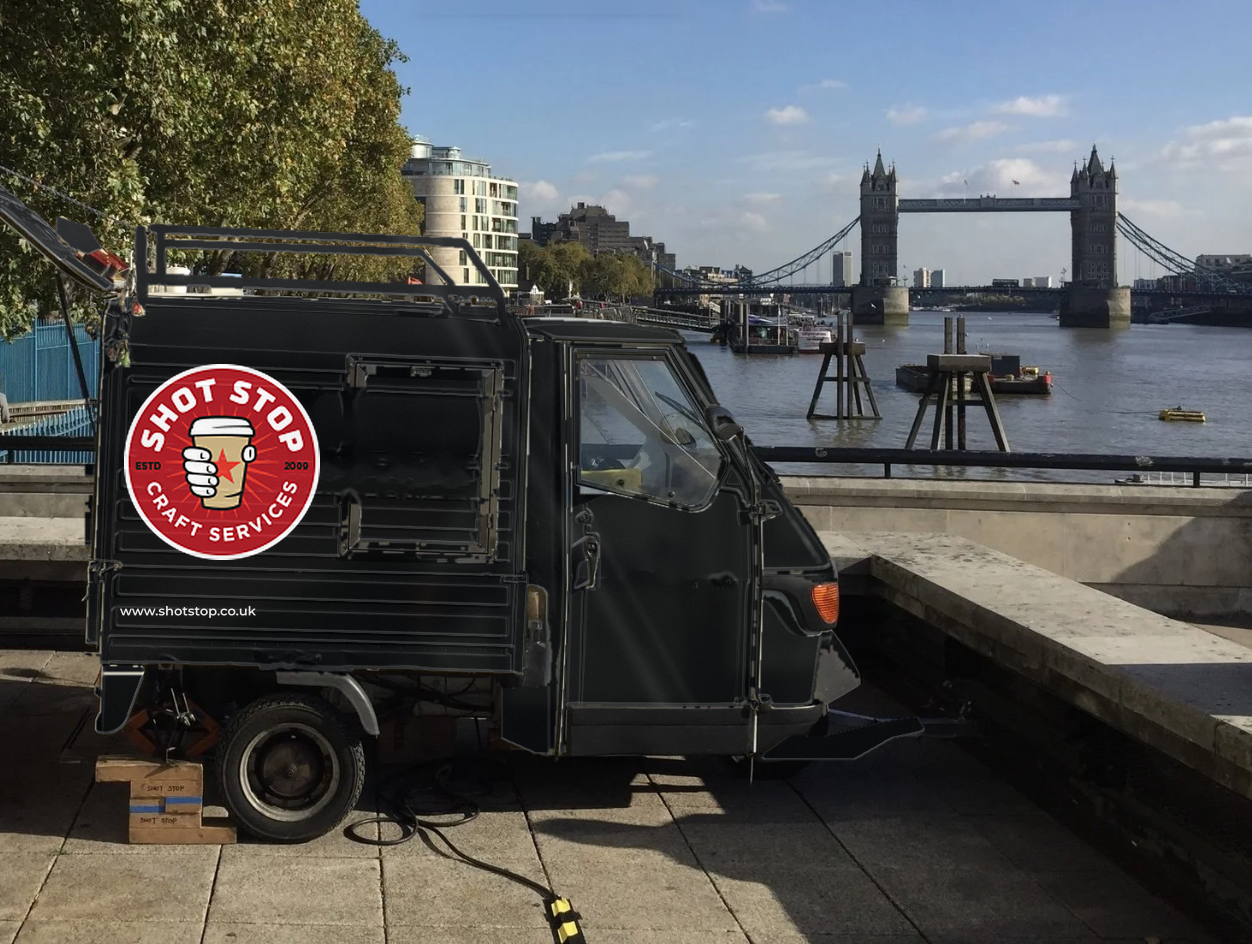
Our teeny tiny Piaggio Ape, Caesar, in position.
The answer is yes, but only if the service is planned for the busiest times of the day.
When several hundred cast and crew arrive within a short period, capacity is not determined by the size of the vehicle alone. It depends on having enough experienced baristas, equipment and stock matched to demand and service points positioned where the crew are working.
An experienced craft supplier will have planned those details, and more, long before the first coffee is served.
400 Crew On THe WITCHER
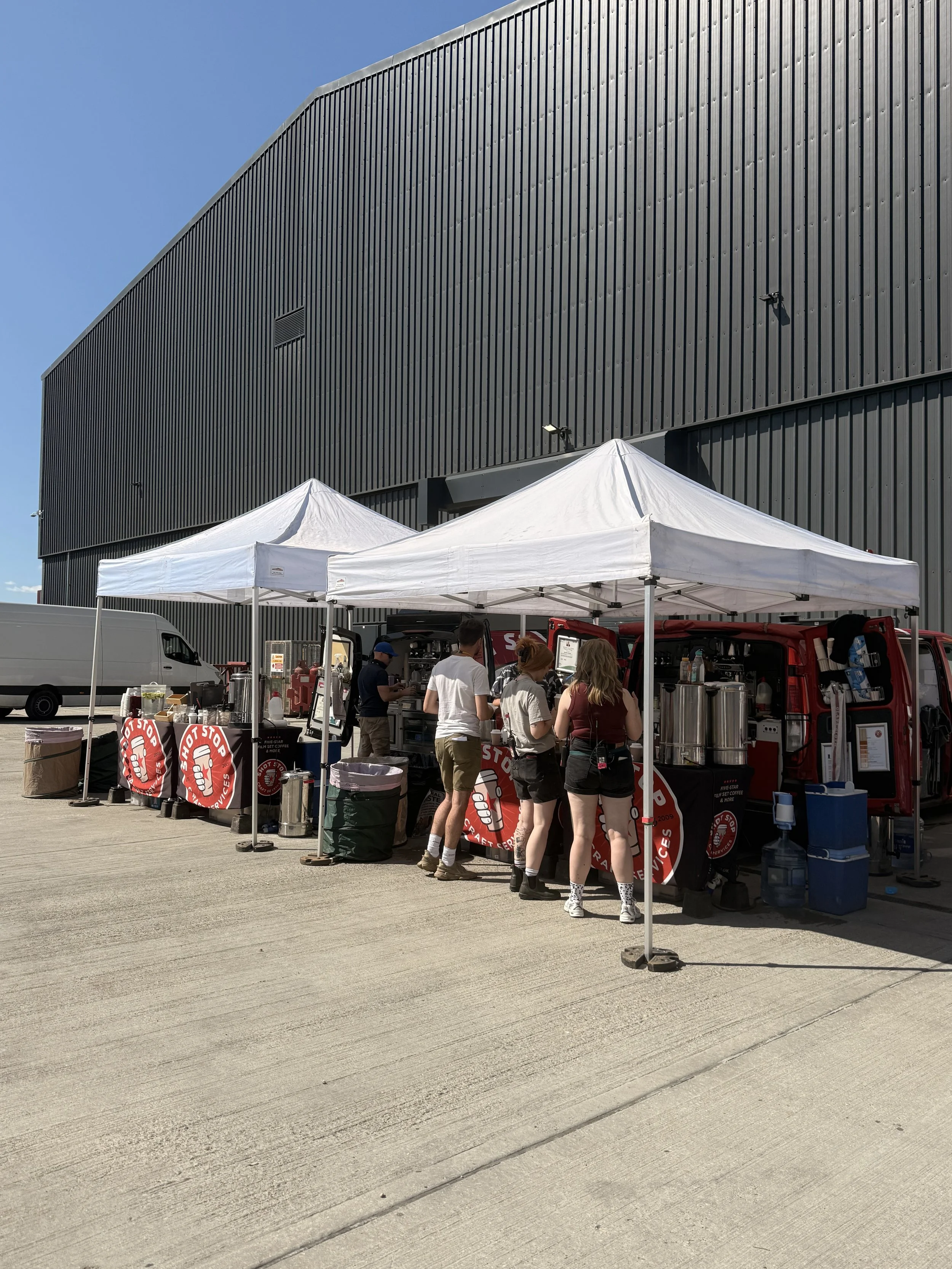
2 compact craft set ups positioned at Longcross film studios to meet the demands of 400 crew at peak times
On The Witcher, we served 400 cast and crew across two shooting units. When the crews were working in the same area, we positioned two compact units side by side with four baristas to keep service fast during the busiest periods.
At other times, we positioned the units separately to keep craft closer to the crews using them.
What makes a compact setup work?
Crew numbers are only part of the picture. The service also needs to be planned around:
Where the crew will be working
When the busiest periods will happen
Whether different stages or units need separate service points
The number of baristas and machines required
Available power and water
How stock will be replenished
What happens if the schedule or crew position changes
A large vehicle in an inconvenient place can still result in long walks and queues.
A well organised compact setup, positioned around crew movement, can provide a faster and more useful service.
helpful questions to ask your craft supplier
Have you served a crew of this size before, and what setup did you use?
How will you serve 400 crew at peak times of the day?
How many service points, baristas and machines will be provided?
What queue time are you planning for at peak demand?
How will the service adapt if crews are working across different units or locations?
What power and water will be required?
What contingency is available if a vehicle or piece of equipment fails?
These questions test the supplier’s experience, service design, staffing and resilience, rather than asking for a theoretical maximum capacity.
what goes on behind the scenes is also important
Capacity also depends on what happens behind the counter. In a compact unit, everything needs a clearly defined place. Backup stock, consumables and spare equipment must all be easy to reach so the team can replenish supplies or replace an item without stopping service or searching through boxes.